



Darshanas
All About Darshanas
Durga Prasad Maruwada

In Indian philosophy, the term Darshana (means "vision" or "viewpoint" or “Introspection of nature of reality”) refers to the diverse schools of thought that seek to understand the nature of reality, the self, and liberation.
Traditionally, there are Nine major Darshanas, which are classified into two broad categories based on their acceptance and non-acceptance of the authority (validity or “Pramaana”) of the Vedas.
1. Classification of Darshanas
The primary classification is based on whether a school is Astika (Orthodox) or Nastika (Heterodox).
1.1 Astika Darshanas (The Six Systems)
These schools acknowledge the authority of the Vedas. They are often referred to as the Shad-Darshana (Six Visions).
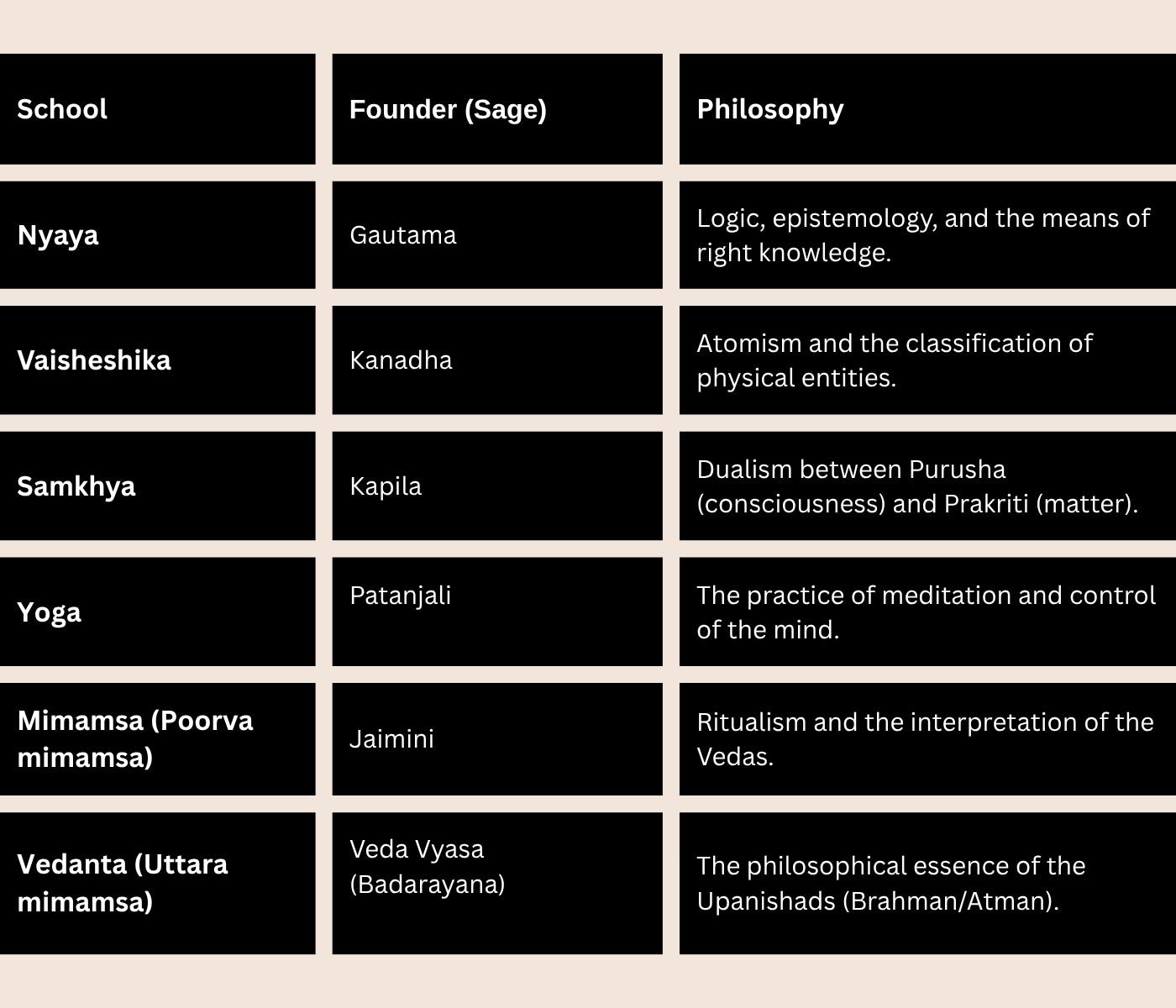
1.2 Nastika Darshanas (The Heterodox Schools)
These schools do not accept the authority of the Vedas.
- Charuvaka: Materialism; believes only in what can be perceived by the senses.
- Jainism: Emphasis on non-violence (ahimsa) and the plurality of truth (anekantavaada).
- Buddhism: Focus on the Four Noble Truths and the path to ending suffering (Nirvana). Again, Buddhism has 4 different branches of Darshanas (hence sometimes we refer to 12 Darshanas instead of 9 also. These take Buddha as “pramaana”).
- Vaivashika
- Soutrantika
- Yogachara
- Madhyamika
2. What qualifies as a Darshana
As I have said, a Darshana is a systematic view of a subject. The Darshana must address the following 7 points (or issues) to qualify as a Darshana. It is possible that some Darshanas may not address all the 7 points, however, it must present a point-of-view for a given issue.
The 7 points (issues) are:
1. Jeeva swaroopam – what is the nature of individual (jiva)
2. Jagat swaroopam – what is the nature of world/universe (jagat)
3. Ishwara – who is or what is God (“Ishwara”)
4. Bandha – what is bondage or nature of bondage or human suffering
5. Bandha Hetuhu – what are the causes of bondage
6. Moksha – what is the nature of moksha (freedom from suffering / limitations)
7. Moksha Sadhanam – what are the means/process for moksha
3. Key Texts Under Each Darshana
Each school has a foundational text (Sutra) and subsequent commentaries (Bhashyas) that expanded the philosophy.
3.1 Astika Texts
- Nyaya: Nyaya Sutras by Gautama; Nyaya Bhashya by Vatsyayana.
- Vaisheshika: Vaisheshika Sutras by Kanadha; Padartha Dharma Sangraha by Prashastapada.
- Samkhya: Samkhya Pravachana Sutra (attributed to Kapila); Samkhyakarika by Ishvara Krishna.
- Yoga: Yoga Sutras of Patanjali; Vyasa Bhashya (commentary)
- Mimamsa: Mimamsa Sutras by Jaimini; Shabara Bhashya.
- Vedanta: Brahma Sutras by Badarayana; Upanishads; Bhagavad Gita. (Collectively called the Prasthanatrayi).
3.2 Nastika Texts
- Charvaka: Barhaspatya Sutras (mostly lost; fragments found in other works).
- Jainism: Agamas; Tattvartha Sutra by Umaswati.
- Buddhism: Tripitaka (Vinaya, Sutta, and Abhidhamma Pitakas); Dhammapada.
In Summary:
The Indian knowledge base is so vast, deep and rich that I sometimes feel one lifetime is insufficient to learn and understand these. Nevertheless, I feel fortunate that I have been able to motivate myself and create an interest to scratch the surface (atleast).
I also feel sometimes at a loss that our education system never addressed these. (I seem to know more about Moghuls and their reign in India, sadly) 😊