


Wisdom of Vedas
Unlocking the Wisdom of the Vedas
Durga Prasad Maruwada
The Vedas are the oldest and most revered scriptures of Hinduism. Derived from the Sanskrit root vid (“knowledge” or “to know”), these texts were composed in Vedic Sanskrit and preserved orally for centuries through precise mnemonic techniques before being committed to writing. By the way the Hindi words Vidya also comes from the same root – quest for knowing.
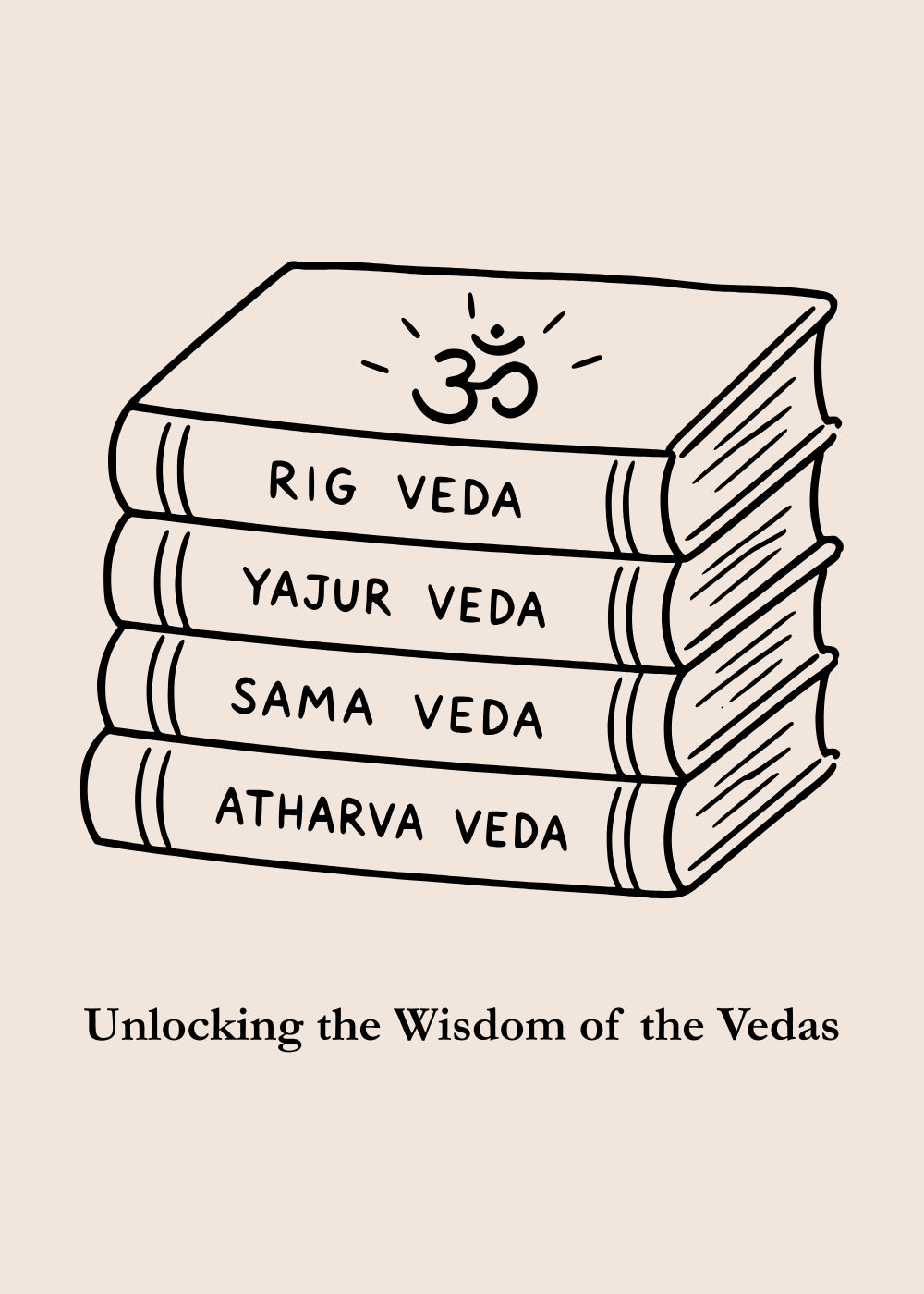
The Four Vedas
The Vedic corpus is divided into four primary collections, each with a unique focus:
- Rigveda (Book of Mantra): The oldest and largest, with 1,028 hymns dedicated to deities such as Agni (Fire) and Indra (Rain).
- Samaveda (Book of Chants): Verses from the Rigveda arranged for musical chanting; regarded as the foundation of Indian classical music.
- Yajurveda (Book of Rituals): A priestly guidebook with prose mantras and detailed instructions for sacrificial rituals (yajnas).
- Atharvaveda (Book of Spells): Hymns for healing, protection, and everyday life, including spells for luck and warding off evil.
Assume that you go to a large bookstore, where the books are arranged by theme for e.g., Fiction, History, Children and so on. The Vedas are also can be assumed as a themed collection of books on the real knowledge human life and purpose.
Structure of the Vedas
Each Veda is further divided into four layers, reflecting a journey from ritual to philosophy:
- Samhitas: Core hymns and prayers.
- Brahmanas: Prose commentaries explaining rituals.
- Aranyakas: “Forest texts” exploring symbolic and meditative aspects.
- Upanishads: Philosophical works on the self (Atman), ultimate reality (Brahman), and spiritual liberation.
Key Concepts & Significance
- Shruti vs. Smriti: Vedas are Shruti (“that which is heard”), considered divine revelation. Epics like the Ramayanaand Mahabharata are Smriti (“that which is remembered”).
- Apauruṣeya: The Vedas are believed to be authorless, “perceived” by sages (Rishis) in deep meditation.
- Rita & Dharma: They emphasize cosmic order (Rita or Reet) and righteous duty (Dharma) as foundations of universal balance.
- Vedangas: The six Vedangas are ancient auxiliary disciplines of Hindu scripture, essential for the proper study, interpretation, and ritualistic application of the Vedas, often described as the "limbs" of the Veda Purusha (Vedic knowledge). They are Shiksha (phonetics), Chandas (meter), Vyakarana (grammar), Nirukta (etymology), Kalpa (ritual), and Jyotisha (astronomy/astrology).
Vedanags are like modern day Help text available about a subject or product that explains “how to” before you begin.
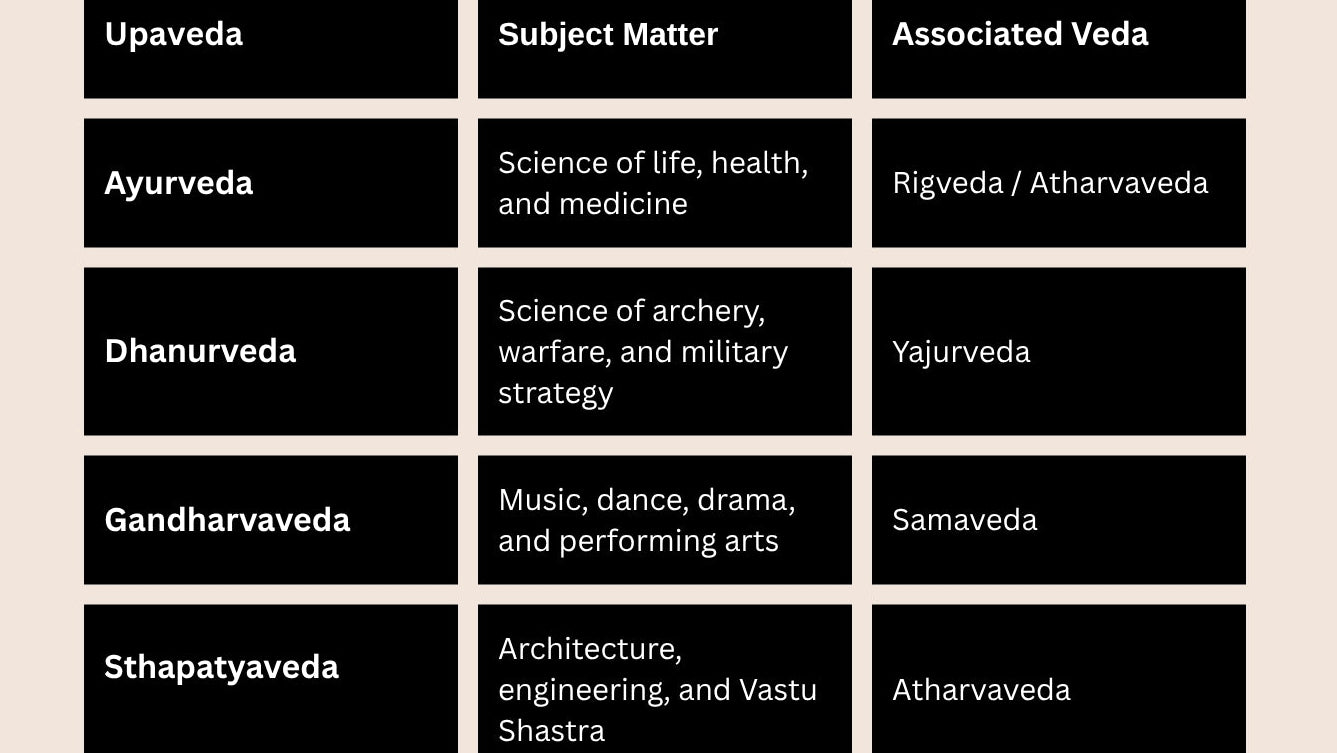
The Four Primary Upavedas
The Upavedas: Applied Knowledge
The Upavedas (subsidiary knowledge) extend the wisdom of the Vedas into practical sciences, bridging spirituality with daily life.
Note: Some traditions list Arthashastra (Economics & Statecraft) as the fourth Upaveda instead of Sthapatyaveda.
Key Characteristics of the Upavedas
- Practical Application: Knowledge systems for health, security, and governance, supporting life in harmony with Vedic Dharma.
- Foundational Texts:
- Ayurveda → Charaka Samhita (medicine), Sushruta Samhita (surgery).
- Gandharvaveda → Natya Shastra by Bharata Muni.
- Dhanurveda → Preserved in epics like the Mahabharata.
- Arthashastra → Kautilya’s manual on statecraft and economy.
- Holistic Approach: Emphasizes the interconnectedness of the individual (microcosm) and the universe (macrocosm).
Closing thoughts:
The Vedas and Upavedas together form a timeless repository of wisdom—spanning spirituality, philosophy, science, and the arts. They remind us that true knowledge is not only about transcendence but also about living in balance with the world around us.